Before the Next One Comes
“The last two didn’t know it was wrong. Do you?”
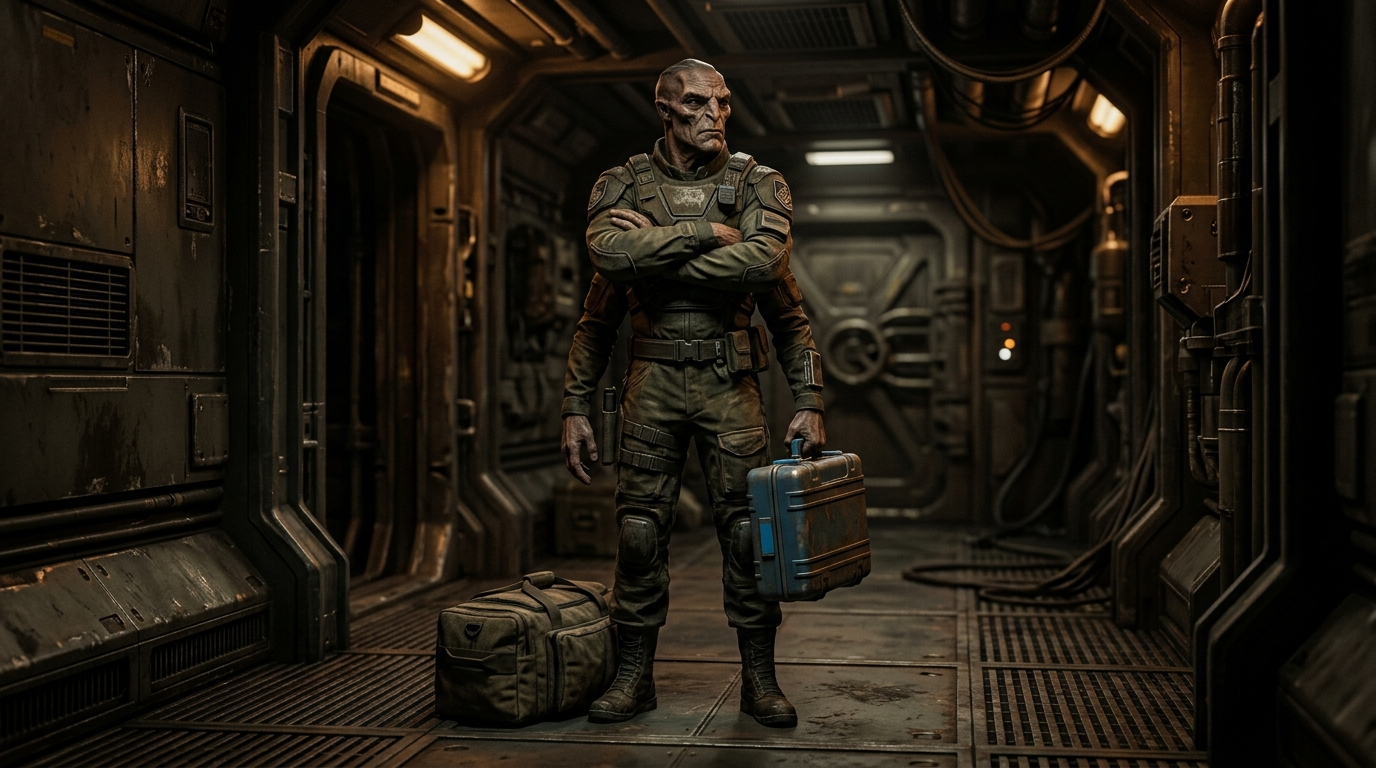
The station had a smell that Vor-Uru didn't have a word for in Standard. Something cold and functional and very old, like the inside of a clock that had been running since before anyone alive remembered setting it. The transit corridor from the docking arm was dim in the way that suggested the dimness was a choice rather than a failure — someone had decided long ago that full illumination was not what this place needed, and the decision had calcified into architecture.
Vor-Uru set their kit down and read the station. Twenty-two years of field postings had made this automatic — a kind of triangulation that operated below deliberate thought, assembling a picture from the quality of the light, the distribution of scuffmarks on the floor plates, the placement of the emergency panels, the particular silence that lived in a pressurized structure housing four hundred people when none of them were in the corridor you were standing in.
The picture assembled quickly. Old station. Functional. Residents rather than crew — people who had stopped thinking of themselves as temporary. The evidence of that was everywhere once they started walking: planters cable-tied to the handrails with actual tomatoes ripening under grow-strips, a child's chalk hopscotch grid fading on the deck plates of junction nine, the smell of someone's onions frying drifting down from residential, a corkboard by the mess with a hand-lettered sign offering haircuts in exchange for engine-room hours. Nobody hangs a haircut sign on a station they plan to leave. And something else, which Vor-Uru noted and set aside without examining: the sense that the station was paying attention.
They'd had that sense before, in certain places. Caves, mostly. Ruins. Sites that had accumulated enough time to develop a kind of orientation toward whatever moved through them. They'd learned not to dismiss it and not to dwell on it. The station was old. Old things noticed things.
Commander Ysel met them at the junction.
"Officer Vor-Uru." Not a greeting; a confirmation. She had the look of someone delivering a briefing they'd already delivered several times to people who hadn't resolved it. "You've read the situation report."
"On the transit. Yes."
"Then you know what we have."
"An anomaly in the lower levels. Designation ECHO-7. Biological, apparently. Not on the station's manifest and not responding to standard contact protocols."
"Correct."
"What's the current status."
"Contained. Sub-level four, sections eighteen through twenty-two. It hasn't moved into residential areas. Hasn't made any aggressive action." A pause that carried something in it — not reluctance. Placement. She was setting something down where Vor-Uru would be sure to see it. "My recommendation to Command was extended observation. Command disagreed."
Vor-Uru looked at her. "That recommendation is in the report."
"I know."
"And the orders I'm carrying supersede it."
"I know that too." Commander Ysel's expression did something brief and deliberate. "I wanted you to know I made the recommendation."
Vor-Uru picked up their kit. "Where's the briefing room."
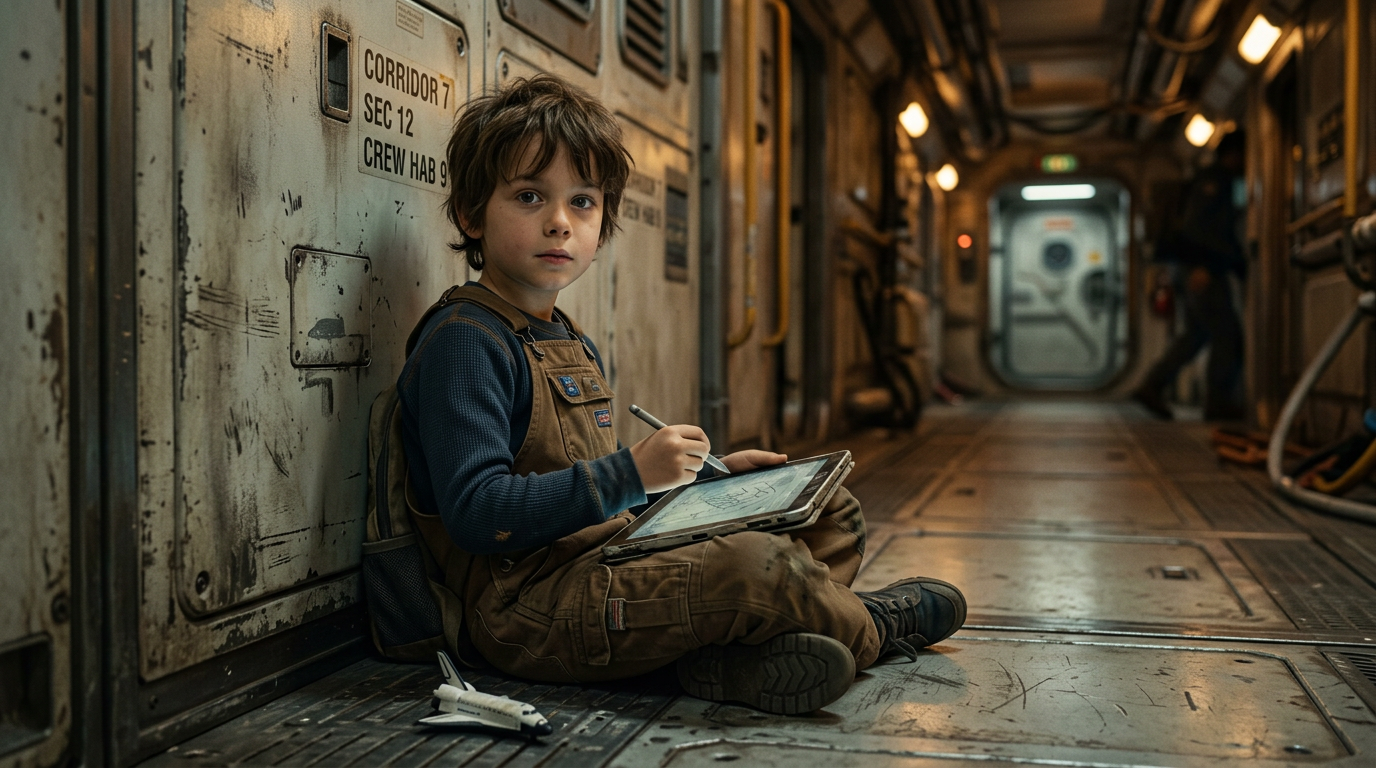
The child was in corridor seven, section three, sitting cross-legged against the wall with a tablet that had seen better decades, stylus moving across it with the focused inattention of someone who was absolutely paying attention to everything around them.
Vor-Uru passed them.
"Are you going to kill it?"
They stopped.
The child — eight, maybe nine, the age at which humans hadn't yet learned to approach things sideways — looked up. Not afraid. Genuinely curious, in the way that made adults realize they'd forgotten what genuine curiosity felt like.
"What makes you think I'm here about the anomaly," Vor-Uru said.
"You have the kit. Commander Ysel had the same kit when she went down to look at it." The stylus stopped moving. "But she didn't have the orders folder. You do." A look at the case in Vor-Uru's secondary hand. "Sealed. Blue tab. That means Command authorization."
Vor-Uru had been in the field for twenty-two years. They had been assessed, reviewed, counseled, and occasionally surprised. They were not often outread by nine-year-olds.
"What's your name," they said.
"Becket." The child said it the way station kids said things — first name only, the station being assumed, the station being the surname. On the tablet, upside down from where Vor-Uru stood, was a drawing of corridor seven itself, careful, exact line work, the conduit runs all in the right places. Kids drew what they loved. Nobody had told this one yet that you weren't supposed to love a hallway.
"I'm here to assess the situation," Vor-Uru said.
"That's what the last one said."
"The last —"
"The last officer. The one before you." Becket went back to the tablet. "I asked them the same thing. They said the same thing."
Vor-Uru stood in the corridor for a moment. Somewhere far down its length the station made a sound — metal answering a temperature change, the small tectonics of old infrastructure that had learned to speak quietly.
"What happened," they said, "with the last officer."
The stylus stopped. "They left. And then ECHO-7 was gone for a while. And then it was back. But different, sort of. Like it had to start over." A pause. "I think it grew back."
Vor-Uru walked to the briefing room.
Adah Nkosi was waiting.
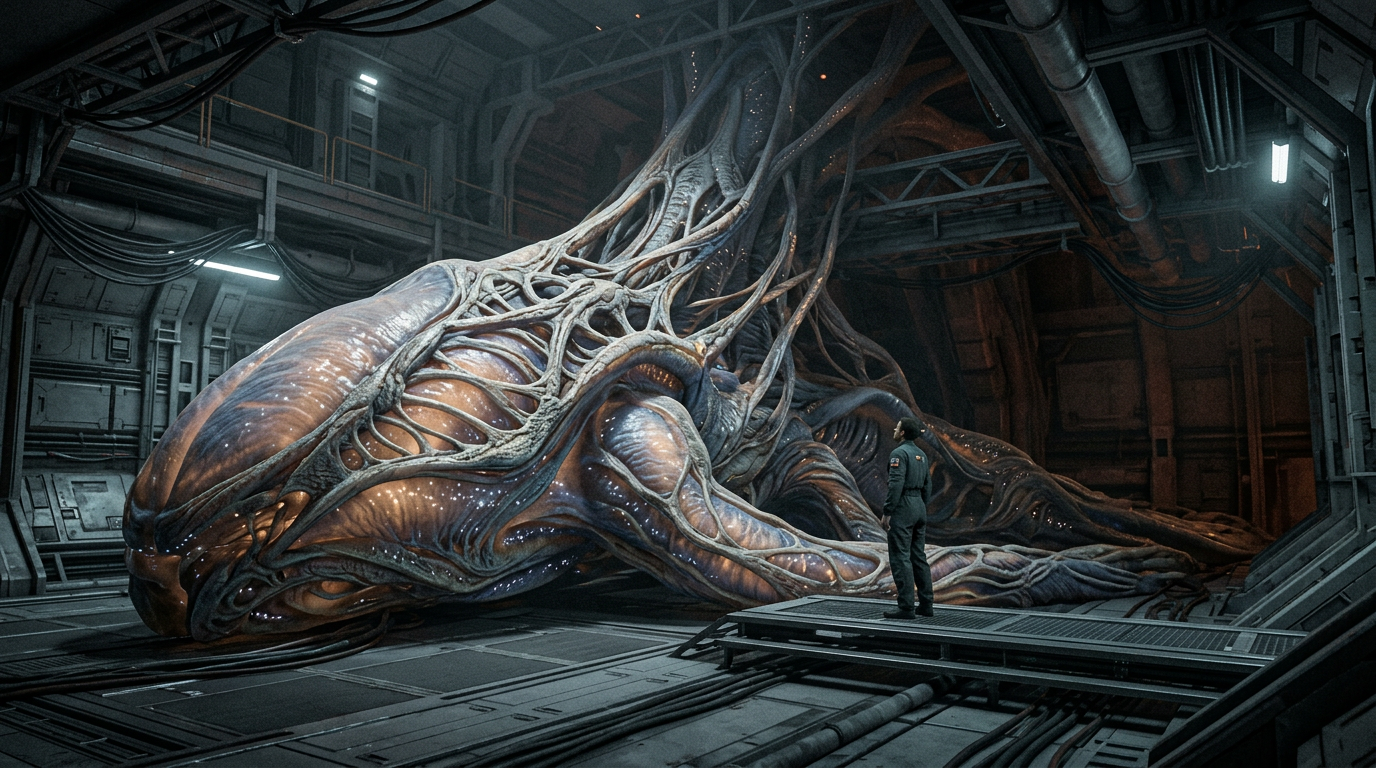
She had chosen to be waiting — this was apparent from her position, from the angle of the chair toward the door. She had known Vor-Uru was coming and had decided to be present for it, and had set the terms of her presence: sitting, not standing; close, not at a remove; looking directly at the door when it opened.
Vor-Uru had not expected her.
"Dr. Nkosi."
"Officer."
Not the greeting she used to use. There had been a time when she said their name — Vor, just the front half of it, an abbreviation she had coined and owned — with the door still closing behind them, with whatever she'd been reading already set down, because in those days they had been the more interesting thing in any room she was in. Everything in those two syllables now — the choice of officer over any part of their name, the complete absence of that — everything was information, and Vor-Uru received it without showing that they had.
"You're the lead researcher."
"I was listed in the materials you received."
"Yes." Vor-Uru set the kit down. "You've been on station for—"
"Seven years."
"You filed the initial observation report on ECHO-7."
"Fourteen months ago. Yes." Adah had not moved since they entered. She was watching them the way you watch someone you'd known well through a window — the recognition and the distance of the glass, both at once. "And I filed the follow-up. And the contact protocol logs. And the recommendation for extended observation, which Commander Ysel endorsed and Command declined." A pause. "I also filed the report that didn't make it into your briefing materials."
Vor-Uru looked at her.
"The one," Adah said, "that describes the two previous visits from Command-authorized officers."
The station made its quiet sound. Vor-Uru sat down.
"Tell me," they said.
She told them.
The first officer had come nineteen months ago. Standard kit, sealed orders, blue tab. Had descended to sub-level four. ECHO-7 had been absent from the sections for eleven months after that. When it returned — and return it did, reforming in the lower levels with the slow certainty of a tide that has never once been talked out of coming back in — it was recognizably itself but earlier, somehow. Less complex. As though something had been lost and it was rebuilding.
The second officer had come eight months ago. The cycle had repeated. Seven months of absence, then return, then the slow rebuilding.
"Both times," Adah said, "the officer completed their assessment, filed a report through Command's direct channel, departed, and never communicated with station personnel again." She looked at Vor-Uru steadily. "Do you know what ECHO-7 is?"
"The briefing describes it as an unclassified biological anomaly of unknown —"
"That's what the briefing says." Her voice hadn't risen. Something harder than raised voices. "I'm asking what you know. What you're carrying in the part of the briefing that isn't in the materials."
Vor-Uru was quiet.
"I've been here seven years," Adah said. "I know this station the way you know your own name. I know which sections ECHO-7 prefers, I know its movement patterns, I know it's been on this station longer than any record in our system goes back. I know it communicates — not in any protocol we have, but it communicates. I know it has never, in fourteen months of observation, made any action that could be characterized as threatening." She leaned forward slightly. "And I know that every time Command sends someone down here with a blue-tab authorization, something that was alive goes away for a while and comes back smaller."
Vor-Uru looked at the table.
"The cause," they said, "is protection of populated transit corridors. This station sits at the junction of three major —"
"I know where the station sits."
"The cause is real."
"The cause is real," Adah agreed. "What I'm asking you is whether ECHO-7 is actually what the cause requires you to believe it is."
Vor-Uru didn't answer. The station settled again around them, its old structural voice, level and without judgment.
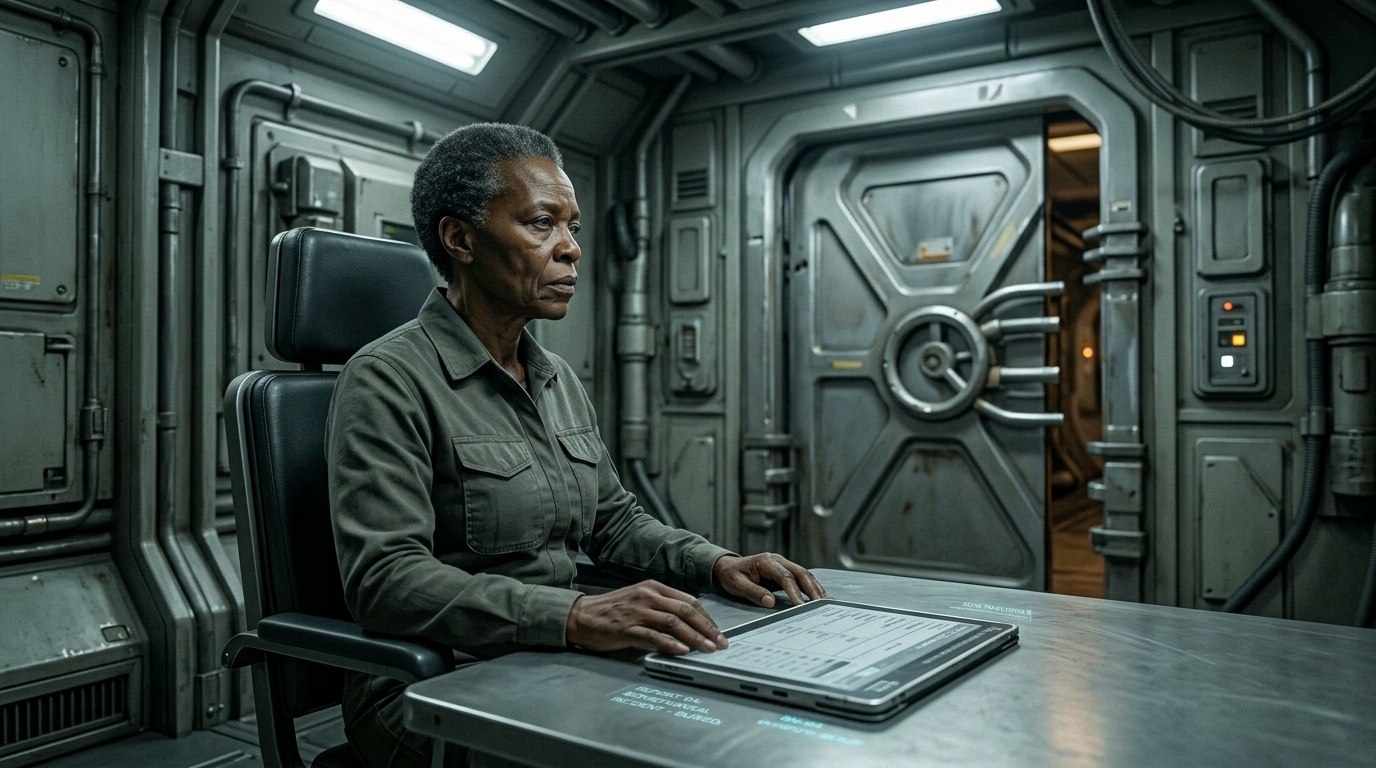
Sub-level four was different from the rest of the station in the way that the deepest parts of old buildings are different — not sinister, not abandoned, but prior. The engineering that kept the upper levels running was visible here as its underlying reality: raw conduit, exposed junction panels, the vascular truth of a pressurized structure. The air was different. Cooler and slightly more present, as though it too had accumulated.
ECHO-7 was in section twenty.
Vor-Uru had seen, in twenty-two years, a range of things that the biological catalogues did not cover. They had calibrated themselves, carefully and over time, to make assessment before reaction, to let the senses report before the older systems interpreted. They stood at the entrance to section twenty and let their senses report.
Large. Not threateningly — simply large, in the way that certain structures are large, because their function requires it. The eye took it in sections because the whole declined to be taken: a dark mass that occupied the space between two structural ribs the way sleep occupies a body, surfaced like slate but moving minutely, a slow continuous traffic under the skin of it, and along its edges a fringe of finer material that stirred against the air currents — reading them, Vor-Uru understood after a moment, the way fingertips read a page of braille that never stops printing. The coloring shifted slightly in the station's dim maintenance lighting, not camouflage so much as the passive adaptation of long residence. Its orientation, when it became aware of Vor-Uru's presence, was not aggressive. It was the orientation of something that had been through this before and had arrived at a stillness with experience inside it.
Vor-Uru thought: it knows why I'm here.
It had watched two previous officers stand in this entrance. It had watched what followed. And it was here again, rebuilt from whatever remained after, waiting for the third.
"ECHO-7," Vor-Uru said. Not a greeting. Not a threat. Just: acknowledgment.
The structure of it shifted — a reorganization, a kind of gathering — and it communicated. Not in Standard, not in any protocol Vor-Uru had trained in, but in the manner of a thing that had outlived its first languages and learned, over spans it did not bother to count, how to make itself understood by small quick creatures who lived and died inside its pauses: through arrangement, through interval, through the held beat between one motion and the next.
What it said was: I know what you're carrying.
And then: The last two didn't know it was wrong.
And then: Do you?
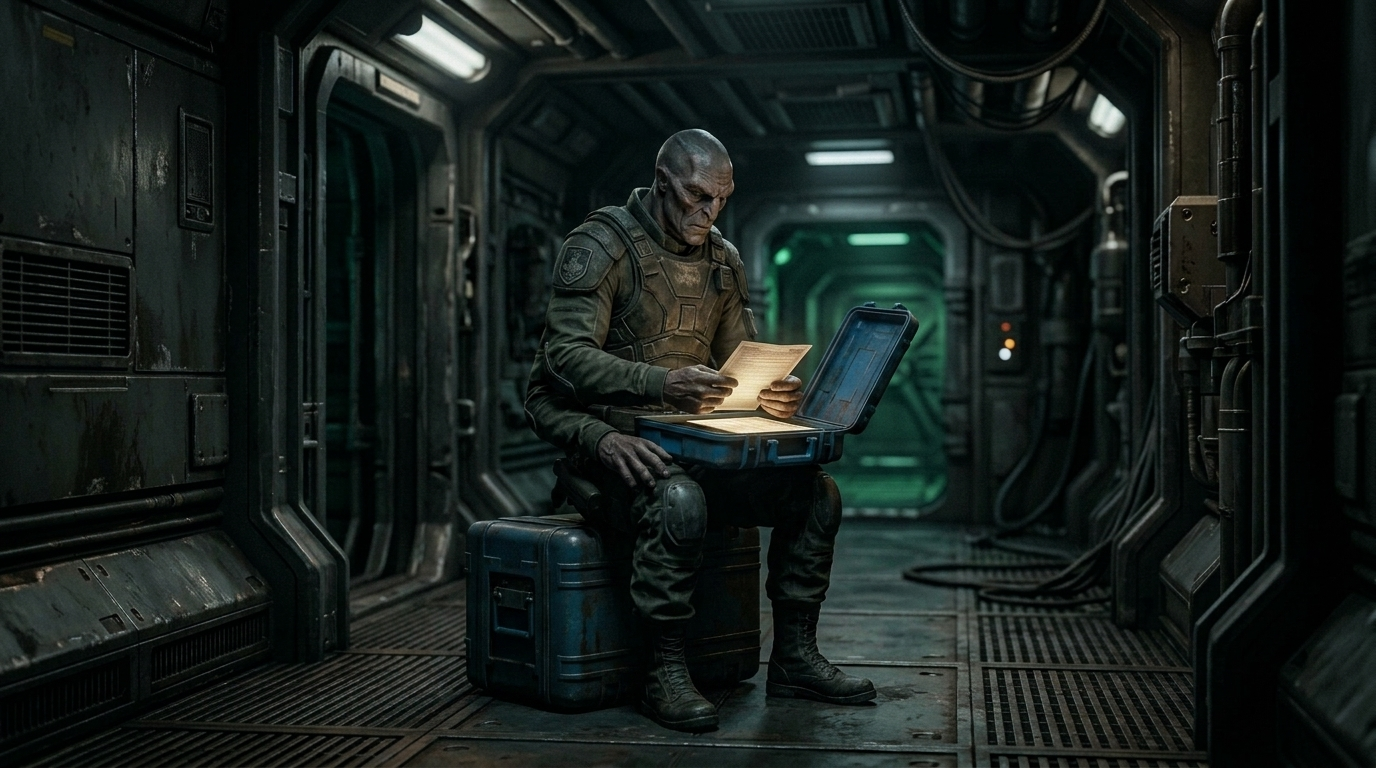
The orders were specific.
Vor-Uru sat in the sub-level four junction corridor — the halfway point between section twenty and the lift back up — and read them again. They were specific and they were reasonable and they followed logically from the cause, which was real: protection of the transit corridors, preservation of the station's function as a waypoint, the safety of four hundred residents who needed this station to be what it was without complication.
ECHO-7 was a complication.
Adah Nkosi was sitting across from them. She had followed, and they had not told her not to.
"It said something to you," she said.
"You've communicated with it."
"For fourteen months. Yes."
"Then you know what it is."
"I know what it's been trying to tell people for longer than our records go back." She looked at her hands. "It's not the threat. It's the record of what was here before. It's what this station was built on top of, and it's spent however long it's spent in the lower levels trying to tell that to whoever would listen, and nobody has listened because listening meant admitting that what we built our cause on was a partial picture." A pause. "I filed that report. It didn't make it into your briefing materials."
Vor-Uru looked at the orders folder.
The cause was real. The threat to the transit corridors was real, had been real, had justified the station and everything it cost to maintain it. The cause was not wrong.
But Adah was right about the one thing that mattered most: the cause had never accounted for what was already here when they arrived. The mission had been written from a picture that was missing a quarter of itself, and two previous officers had executed orders based on the incomplete picture, and ECHO-7 had rebuilt afterward and waited for the next one with a patience that was almost incomprehensible and absolutely clear.
Vor-Uru thought about the child in the corridor, drawing the conduit runs of a hallway because nobody had told him yet that you weren't supposed to love one. That's what the last one said.
They thought about the orders. About the cause, which was real, and the people carrying it, which were not the same thing.
They thought about Adah, who had once said the front half of their name with the door still closing, who remembered a version of them that apparently no longer existed. They thought about the order they had given — whichever order it was, whatever moment had changed how Adah Nkosi looked at them, glass going up between one posting and the next.
They thought about the fact that they didn't remember it.
That was the thing about carrying causes: the individual weights went unrecorded. You signed, you executed, you transferred out, and somewhere behind you a woman stopped saying your name, and the file that would explain it existed only in other people's memories, in archives you were never cleared for.
They filed their report through the standard channel, not Command's direct line. They wrote it carefully and completely, with all particulars and no omissions, including the two previous visits and the pattern and Adah's fourteen months of contact logs and what ECHO-7 had communicated and what it was and what it wasn't. They attached Dr. Nkosi's report, the one that hadn't made it into their briefing materials.
The final line read: ECHO-7 presents no threat consistent with the mission parameters. Recommend suspension of authorization. Recommend review of previous visit reports. Recommend extended observation under Dr. Nkosi's continued supervision.
They sent it. Then they sat with the weight of what came after — the career review, the posting reassignment, the slow institutional friction of having filed the wrong thing through the right channel. It was a real weight. They held it and found it bearable.
The cost was worth it. They knew that with a certainty that didn't require examination.
They didn't know why they knew it so clearly. But they did.
The station had seen three officers come with that authorization and that kit.
It had watched the first two descend and return and depart and had tracked the long absence that followed and the slow return of what lived in its lower levels, rebuilding from whatever persisted. It had watched four hundred residents go about the business of living on the edge of mapped space, three months from anywhere that mattered, and it had held them in its old functional structure without judgment.
It watched the third officer sit in the junction corridor and read their orders and make their decision.
It watched them file the report.
It felt — through the quality of air movement, through the distribution of weight on its floor plates, through the settling of joints that had been settling since before anyone aboard was born — the difference this time.
Not resolved. Not over. The authorization would be reviewed. Other officers would be sent. The cause was real and the people carrying it would not stop carrying it on the basis of one report, however complete.
But different, this time.
The station settled around the officer in the junction corridor, adjusting to the new weight of a decision that was going to cost them something. It held them the way it held everyone — without preference, without judgment, with the steadiness of infrastructure that had learned to endure.
In the lower levels, in section twenty, something old and not dangerous waited.
The station waited with it.
Whatever came next, it would be here for it. It had always been here for it. It would watch what came next the way it had watched everything else: carefully, quietly, without looking away.