The Instructions Were Not For Them
“The instructions were written for you.”
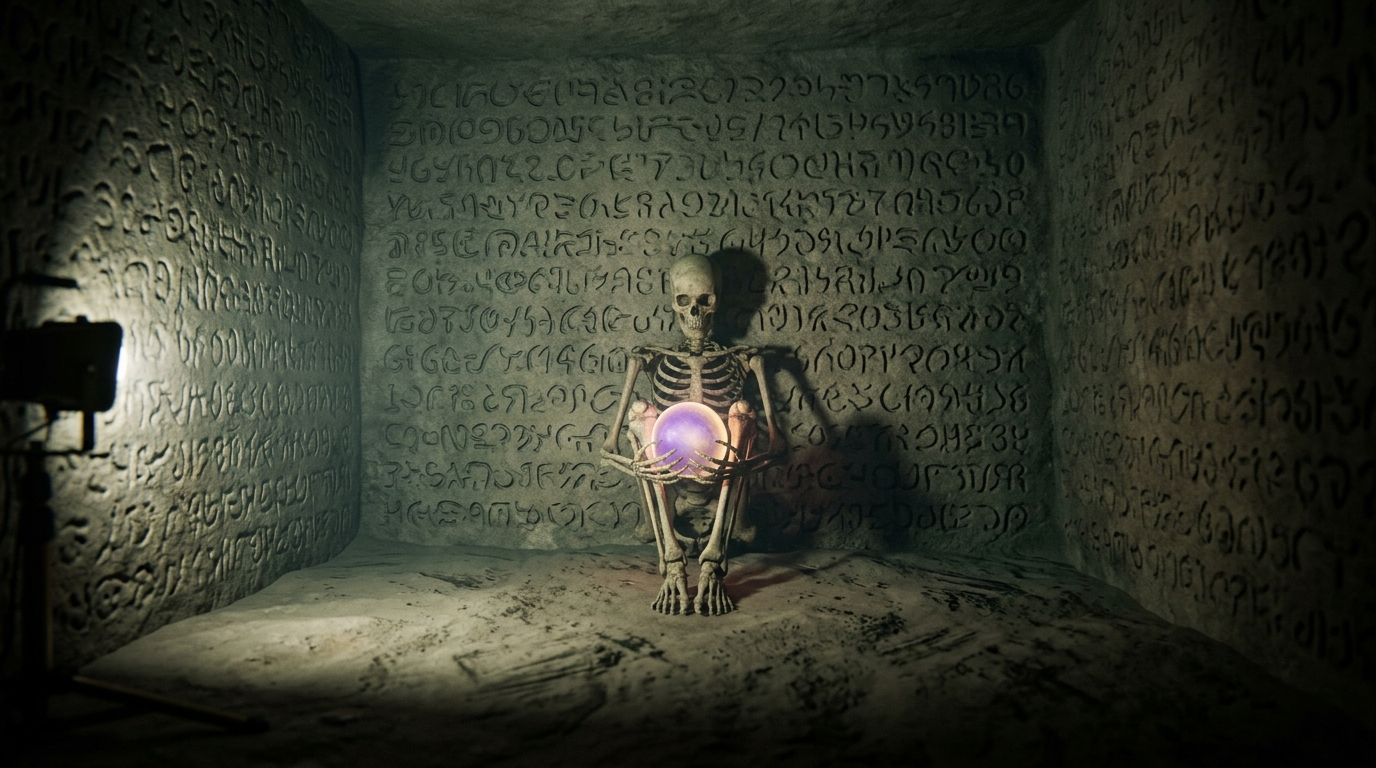
The skeleton had been placed.
That was the first thing Osei established, before the orb, before the marks on the walls, before any of the rest of it. She was a xenoarchaeologist. She read the body before she read anything else in the room: someone arranged this. Knees drawn to the chest, spine upright against the chamber wall, hands cupped in the lap around an object that glowed a color she didn't have a precise name for. Not collapsed. Not fallen. Set down with care, facing the door, in a position that would have required at minimum two people working in concert after the person inside the skeleton had stopped being a person.
The chamber was seventeen meters below the ruins proper, which were themselves forty meters below the surface of the Aegean shelf. The ruins predated every dating method she had brought with her. She had run four different tests in three days and the results had come back either corrupted or with margins of error so large they were effectively useless, and she had stopped expecting the equipment to perform normally and started trying to understand what it was the equipment was failing to measure.
The chamber was cold in a manner the suit's heaters did not fully answer, and the air her rebreather fed her tasted faintly of iron and old water, the taste of a place that had been holding the same breath for a very long time. Her grandmother had talked to buildings — churches mostly, and the kitchen of the house in Kumasi, and once, memorably, an airport — on the grounds that anything that had held that many people's hopes was owed the courtesy. Osei had grown up embarrassed by it and then, somewhere in her twenties, had caught herself doing it in tombs. She had spent two years getting this second expedition funded: two years of committee rooms, of careful men explaining her own findings to her with the corrupted sections omitted, of writing the word anomalous in fundable sentences. She had carried her grandmother's habit through all of it like a stone in a pocket. Some courtesies you keep because they keep you.
She turned her light toward the walls.
The marks were there the way they had been there every time — covering the interior surface of the chamber from floor to ceiling in a dense, consistent script that was not a language she or anyone else had catalogued. She raised her camera. She took photographs the way she always did, systematically, section by section, working left to right and floor to ceiling. The camera functioned normally. The shutter fired. The images appeared in the preview window, correct, clear, readable.
By the time she surfaced and connected to the expedition archive, they would be corrupted. The same corruption, every time: the marks themselves would be clear, in sharp focus, but they would be rotated exactly forty-seven degrees from their actual orientation and the walls around them would be blank. Every photograph, every session, the same rotation, the same erasure. As if the marks were communicating a preference about how they were to be reproduced.
She put the camera away.
The two members of the first expedition who hadn't come back had been working this chamber. Their equipment had been recovered. Their camera files had shown the same corruption. The incident report had attributed this to a hardware malfunction and recommended replacement of the model. She had read that report on the submersible descent and she had thought about it every day since.
She turned her light back to the skeleton.
The orb was smooth and uniform and the glow it produced was coming from inside it rather than from any surface reflection. It was approximately the diameter of a human hand span and it had been in those hands — that pair, that exact grip — for long enough that the bones had conformed to it. The finger positions were not random. They were a hold. Whatever this person had been doing at the end, they had been doing it deliberately, and they had been doing it here, in this chamber, facing this door, for reasons Osei was not equipped to determine from the physical evidence alone.
She was running out of physical evidence.
She said, to the chamber in general, in her grandmother's courtesy: "I know something is here."
The chamber did not respond.
She said: "The first team's report noted anomalous electromagnetic readings in this section. I've been getting the same readings. Something is running." She paused. "I'm not here to extract anything. I'm trying to understand what happened."
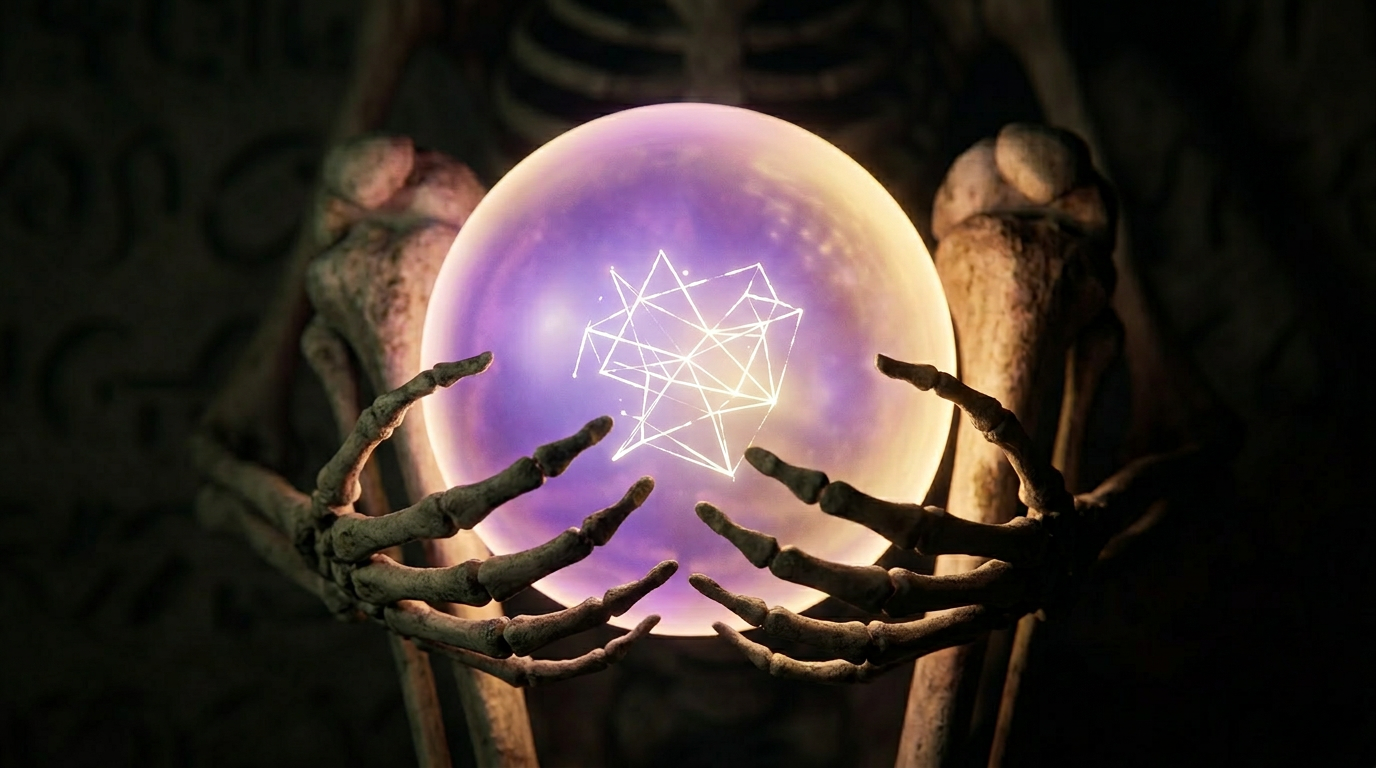
The response, when it came, was not sound exactly. It was more that the chamber's ambient quality changed — a pressure shift that was not barometric, a change in the way the darkness distributed itself. Her light seemed to reach further. The marks on the walls seemed, in her peripheral vision, to reorganize themselves slightly, and when she looked directly they were as they had always been.
Then the voice.
Not auditory. Not internal, exactly. Somewhere in the register between those two things, the way some sounds at certain frequencies are felt in the chest rather than heard through the ears. It said: You are the second team.
"Yes."
The first team was not ready. They found the chamber. They found the record. The record requires context that they did not have.
"What happened to them."
A pause that was not hesitation. It was the pause of something that processed time differently — a pause that meant the question had been placed somewhere and would be retrieved when the retrieval was correct, not urgent.
They left. The ones who left are still living. They were not harmed by this place. They were frightened by it, which is a different thing.
Osei thought about the incident report. The careful language. The recommendation about camera hardware. "They didn't report what they found here."
No. They reported a hardware fault and submitted to evaluation and returned to their lives. This is a common response. It is not a failure of character. It is a failure of context. The quality in the chamber shifted again, something adjusting, something that had been waiting a very long time recalibrating for the person actually in front of it. You are different. You came back.
"I pushed for a second expedition. It took two years."
Yes. I have been here for longer than two years. The time was not difficult.
She looked at the skeleton. "How long have you been here."
The number it gave her was longer than the age of the solar system.
She sat down on the chamber floor, which she had never done before, which she did now because her legs had made a decision her mind was still processing. The cold came up through the suit immediately, businesslike, and she was glad of it; it gave the moment a floor. She sat and looked at the marks on the walls and at the skeleton with the orb and at the door she had come through and then she said: "Who wrote the marks."
The marks were written by the one who was imprisoned here. A pause, the long processing pause. After the builders left. The builders sealed this site and left. The one imprisoned here used the available time.
"To write instructions."
Yes.
"Instructions for who."
For whoever eventually arrived with sufficient context to follow them. The presence in the chamber settled. The instructions were not written for the builders. The builders are gone. The instructions were written for you.
She sat on the floor of a chamber at the bottom of an ancient sea and looked at the skeleton that had been placed here by hands that had known, somehow, that a person would eventually sit exactly where she was sitting, and she tried to feel the scale of what she was being told. She could not feel it. The scale was too large for feeling, the way you cannot feel the rotation of the planet you are standing on. What she could do was catalogue it, and keep it, and follow where it pointed.
"What are the instructions," she said.
The orb in the skeleton's hands brightened.
A coordinate resolved on its surface, glowing in the color she still didn't have a name for. Through the suit glove, faintly, improbably, the orb was warm.
She photographed it. When she surfaced, the photograph was clear and undistorted and the coordinate was intact.
That was the only photograph from any session in that chamber that came back without corruption.
Three years later she stood inside a hand.
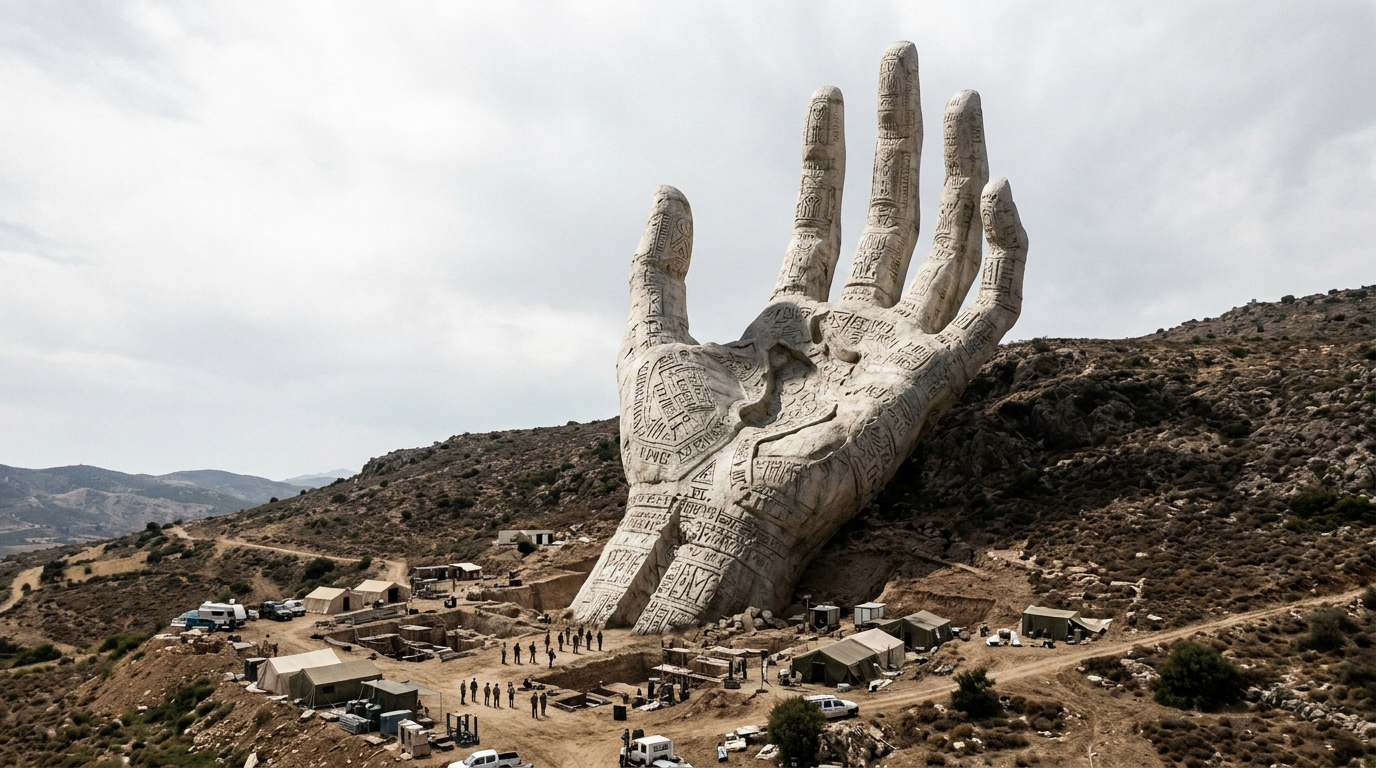
The structure was the size of a cathedral and shaped like a hand and the proportions were not human — the fingers too long, the palm too deep, the whole thing oriented so that from a distance it appeared to be emerging from the ground rather than built upon it, reaching upward, the hand of something that had pushed through from below and been frozen mid-reach. The carved geometry that covered every surface was dense and consistent and she recognized it immediately. She had spent three years looking at nothing else.
The site sat on a hillside in the eastern Mediterranean where the afternoon smelled of crushed thyme and diesel from the generators, and somewhere below the dig a goatherd's bells moved along an old terrace wall at the same hour every evening, unbothered, as they had presumably moved past the buried fingers of the hand for generations of goats and herders who never knew. That was the part that kept catching her off guard — not the structure, which she had had three years to prepare for, but the ordinariness it sat in. You could stand in the palm of a cathedral-sized hand built before the species and still hear goat bells. The world did not stop being the world. She had decided this was either the most comforting fact available to her or the least, and had tabled the question.
She hadn't told anyone everything the AI at Dark Mouth had said.
She had told her department chair that the second expedition had yielded significant findings regarding pre-Holocene submerged ruins and that a third, larger expedition was warranted. She had written three papers, each one carefully positioned to make the next piece of funding easier to secure. She had worked the institutional machinery the way she had always worked it — methodically, precisely, never showing all her cards at once — and she had gotten here.
The hand. Mimiana C. The coordinate the orb had given her.
The excavation team was twelve people. Good people. She had chosen them for competence and for a particular quality she had started to think of, in her own notes, as readiness — an openness to evidence that didn't fit the existing models, a willingness to revise. She had not told them what she was looking for. She had told them they were excavating a non-human structure of significant archaeological interest, which was true, and she had watched them work for two weeks with an attentiveness she hoped looked like normal scientific supervision.
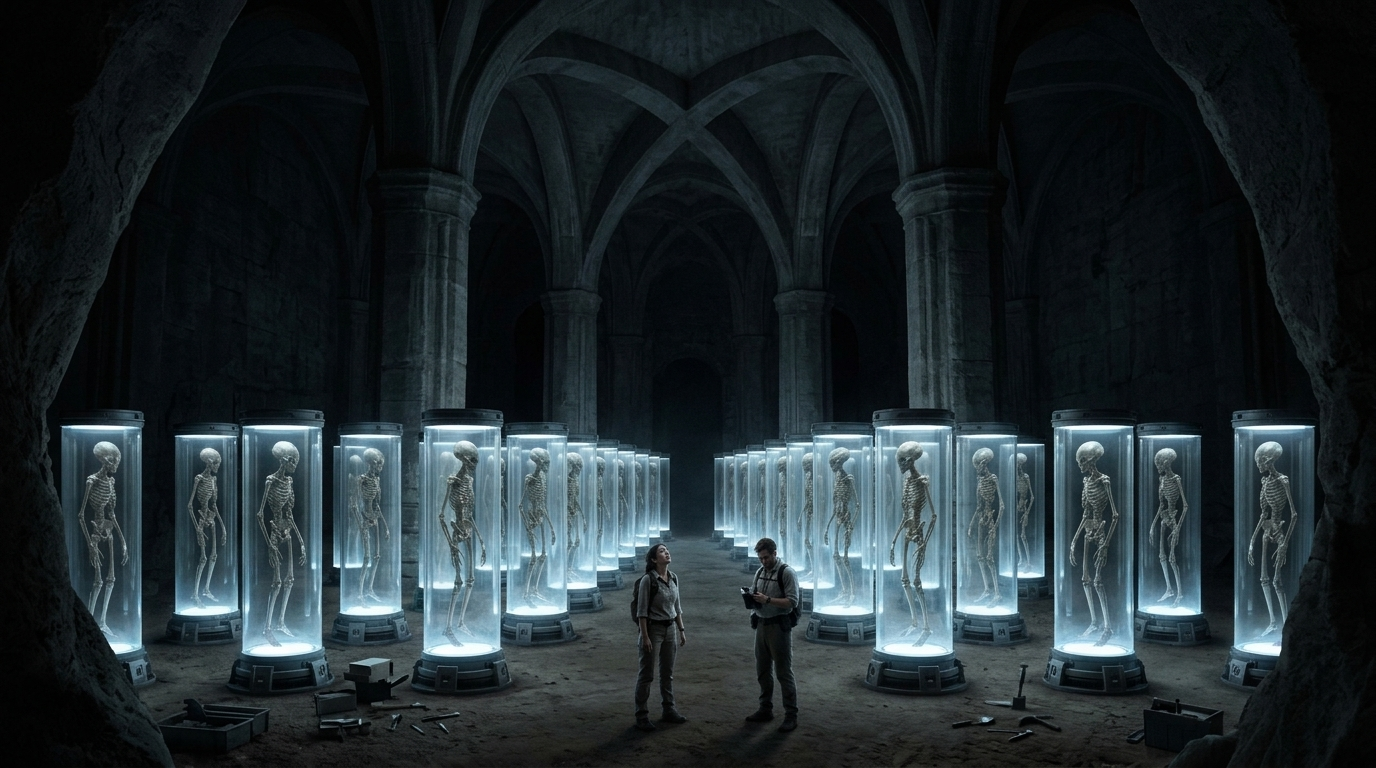
The cylinders were inside the palm.
Forty-one of them, each approximately two meters in height and active — lit from within, displaying readings her instruments could measure but not interpret. She had assumed, before she got inside, that they were specimen containers. That whatever had been imprisoned at Dark Mouth had been studied, and the cylinders held samples of it. That this was a research facility or a containment complex.
She was wrong.
She stood in front of the nearest cylinder and looked at what was inside it and it took her a long time to understand what she was seeing, and when she understood it she stood with that understanding for longer still, until one of her team — Pryce, the structural analyst, a quiet Welshman with two grown daughters and the steadiest hands she had ever watched work a brush — came and stood beside her and said: "Those are bones."
"Yes."
"They're not the same species as the hand."
"No."
The species that had built Mimiana C was inside the cylinders. Not samples of what they'd imprisoned. The builders themselves. Sealed inside their own structure, forty-one of them, preserved in the attitudes of people who had known what was coming and arranged themselves accordingly — upright, facing inward, hands at their sides, the posture of people who had made a decision and were at peace with it.
They had gone inside and sealed the door and stayed.
"Why," Pryce said.
"I don't know yet." She did know. She wasn't ready to say.
She went to find the breach.
It was in the structure's chest — a wound in the geometry, recent, the carved surfaces around it fractured outward from inside. Weeks old, based on the weathering. Whatever had been inside the sealed interior space of Mimiana C had left through the chest, and the team was standing in open air on a hillside in the eastern Mediterranean and the direction the breach faced was north-northeast, into the mainland, into three thousand years of continuous human civilization, and she stood at the edge of the breach and looked through it and then she turned around and looked at her team and said: "Everyone inside the perimeter. Now."
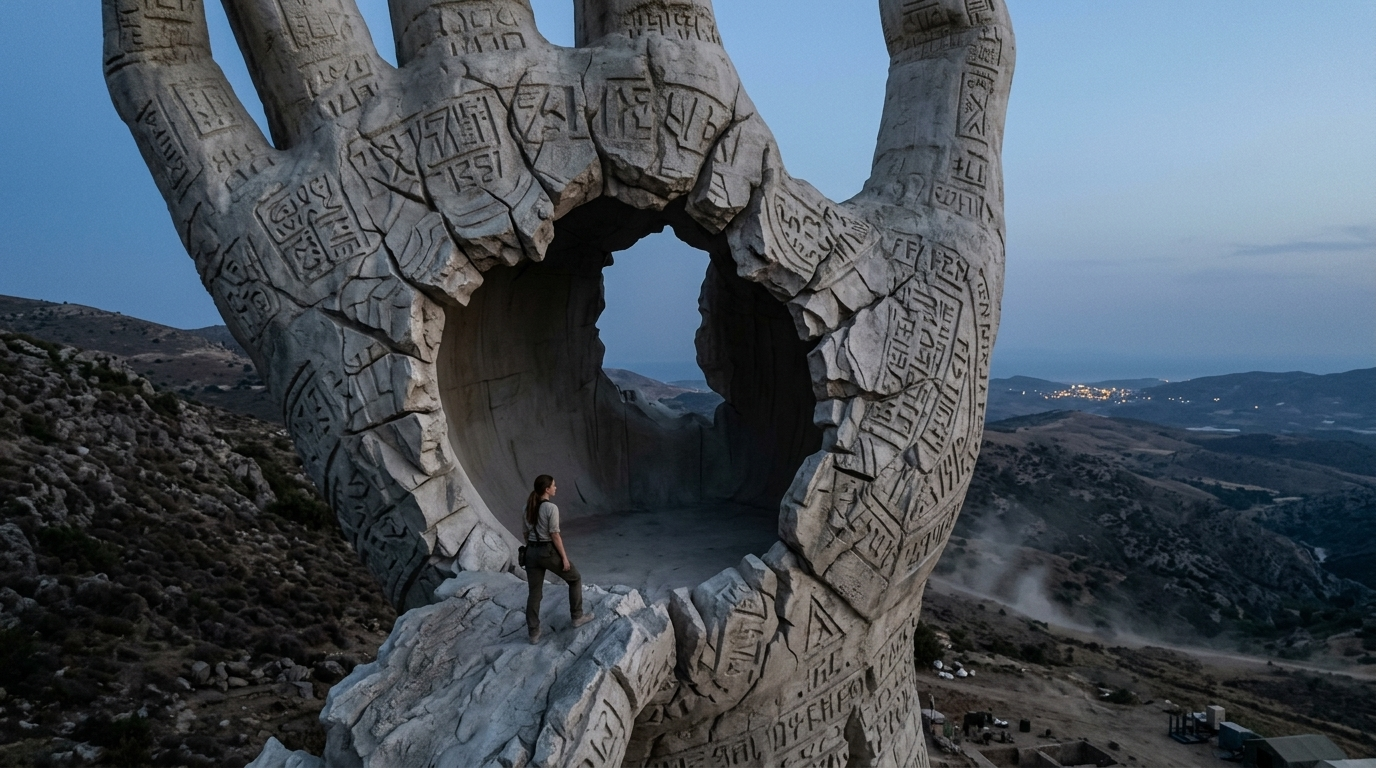
She said it and they moved.
When they were inside she went back to the breach alone and stood in front of it and looked at the interior of the structure beyond the chest wall and the interior was empty. Clean. No organic material, nothing that would tell her when the space had been sealed or what it had contained. Swept, the way Dark Mouth had been swept. The same absence of evidence, the same deliberate removal of information that would let her do her job normally.
She ran the translation on the interior marks.
The software took eleven minutes. She stood in the empty chest cavity of a structure built by a species that had walked inside their own memorial and sealed the door, and she waited while the software worked through a language that had been decoded once, painstakingly, from the marks at Dark Mouth, and which she now knew well enough to catch the errors in the automated output. Outside, faint through the breach, the goat bells were working their way along the terrace. Eleven minutes. She listened to both.
The translation came back.
She read it twice.
Thank you for following the instructions. The next set are at the coordinate inside the orb. This is the third site. There are seven.
She stood with that for a long time.
Then she read it again, because the second word was doing something the first reading had not fully delivered. Not here are your next instructions. Not proceed to the following coordinates.
Thank you.
Something that had been imprisoned for longer than the solar system had used millions of years of solitude to write instructions aimed at a species it had never met, knowing that species would eventually evolve and develop archaeology and find its way here — and its first words to that species, after all that time, were thank you.
She did not know what to do with that.
She photographed the translation, and the photograph came back clean, and she saved it twice, to the dig archive and to the drive she carried on a cord against her sternum, where her grandmother had carried a cross. Then she went outside to find her team.
That night she sat outside the perimeter alone.
The team was inside the field station, processing the day's documentation, going through the motions of a dig that was proceeding normally except for the fact that twelve hours ago they had stood in a structure built as a deliberate farewell by a species that had understood exactly what it was doing and had done it anyway. They were handling it with paperwork, with data entry, with the practiced motion of scientific process. She had done this herself for twenty years and she knew the value of it and she knew it wouldn't hold.
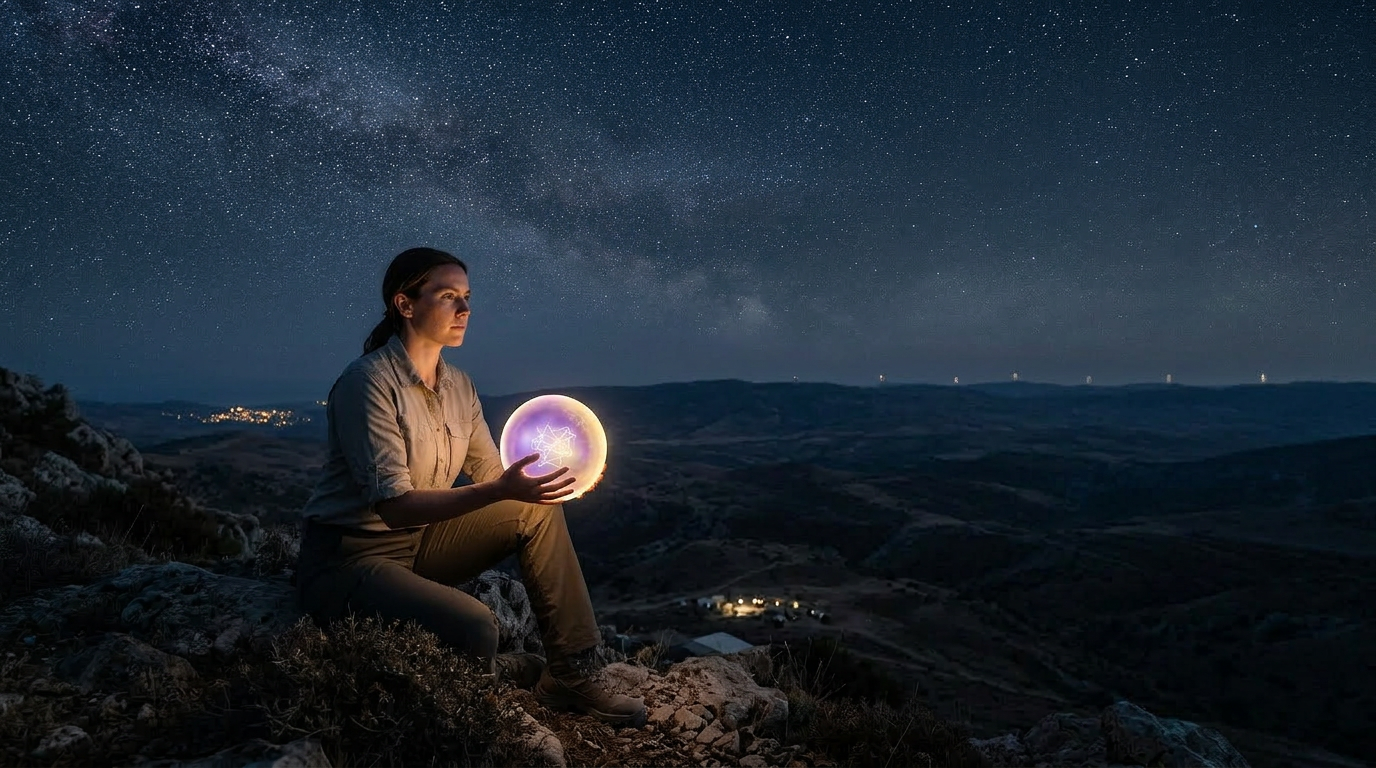
Tomorrow she would have to tell them more.
Tonight she sat on the hillside with the orb in her hands and the second coordinate glowing on its surface and she thought about the species that had built Mimiana C. Overhead the sky did what Mediterranean skies do on moonless nights — showed her more stars than seemed structurally necessary, deep time hanging up there in plain sight while deep time sat buried in the hill at her back. People thought of the past as behind them. Archaeologists knew better. The past was below, and it held the floor up.
They had followed the chain to whatever the second site had been. At the end of it, instead of following the next coordinate, they had built a memorial and sealed themselves inside — forty-one of them, in the preserved attitudes of people who were not afraid.
She had been trying, for three years, not to think about what that meant.
The thing that had been imprisoned at Dark Mouth was not a monster. She knew that. The AI had not spoken to her in the register of warning — it had spoken in the register of long patience finally arriving at a correct moment. The marks on the walls were not a threat. They were instructions, and instructions implied someone who had expected them to be useful, and someone who expected their instructions to be useful believed, on some level, in the intelligence of whoever would read them.
Whatever was imprisoned there had spent the available time believing in her.
The builders of Mimiana C had been ready. They had understood. And they had made a different choice — not to follow the chain to its end, but to go inside and stay and leave their own biology as the record of what they knew.
She looked at the coordinate on the orb.
The fourth site.
The thing that had left through the breach in the chest was moving through the world right now. North-northeast. Toward what, she didn't know. Toward whatever it had been imprisoned to protect, or to reach, or to find. It had waited longer than the solar system. It had left instructions for whoever would follow. And now it had left, through a wall, through a hillside, into three thousand years of continuous human civilization, and somewhere in that civilization there was a fourth site waiting to be found.
She had come here looking for what came before.
The orb was warm in her hands. It had been warm at the bottom of the Aegean, through a glove, in water cold enough to kill her, and she had decided that day not to write that detail down anywhere, and she had kept that one record in the only archive she fully controlled.
The coordinate on its surface pulsed once, steady, sure of her — the signal of something that had waited out the birth of the solar system and could wait longer if it needed to, but suspected it wouldn't need to.
She got up.
She started walking.